Tuesday, September 30, 2014

Reflection: The Power and Pathologies of the Ways of Knowing

The great thing about our ways of knowing is that we NEVER use only one way.  As a knower, I am constantly recieving (or gaining) input throuh my sense perception, my ability to reason, the use of language through communicaiton, and even my emotional state.  For example, when we sit in the doctoral room and have our discussions, each of us enters the room with a current emotional state. Unless one of us stays the night in the room and slept all day, each of us has emotional encounters throughout the day that may shape how we feel.  Additionally, we use perception to see each others' reacitons to material and hear responses to both concrete and abstract questions.  We reason with each other and even ourselves to make connecitons and conclusions, and then we use language to responed with a hopefully appropriate answer.  We use these ways of knowing to gain knowledge about research and the world around us.

However, each of these ways of knowing can create problems of knowing for us throughout this process.  For example....let's say that I have a faculty meeting before our Tuesday session and that faculty meeting focusses on English II End-of-course data and standard 6 of the NC teacher evaluaiton rubric.  Let's now say that the topic of discussion invovles the importance of data and a "hard" scientific approach to reserach and how it's the BEST way to come to reach conclusions or generalizations.  If this were to happen (and it doesn't because I have to leave too early to attend faculty meetings on Tuesdays), my emotions would clearly hinder my gaining of essential knowledge.  My emotions and reason are so closely linked, that one can get in the way of the other.  Sometimes I let reason win, and sometimes I let emotion win, but must of us teater somewhere in the middle of the Emotion-Reason continuum.

In terms of reserach, the positivists say that emotion serves no purpose in the gaining of knowledge, but what I find ineteresting is that a researcher would not be interested in that data if he or she were not somehow attached to this information emotionally.  If we don't care about it, what's the point in knowing it.  I find it interesting that I started to write this post before watching Kitchen Stories, but I left the post at this point so that I could watch the film.  Apparently the creators of this film agree. It's human nature to want to know people's stories, and we feel awkward and unnatural being positivistic. Emotion both hinders the empirical research but then inspires the observed to do the observations.

Monday, September 15, 2014

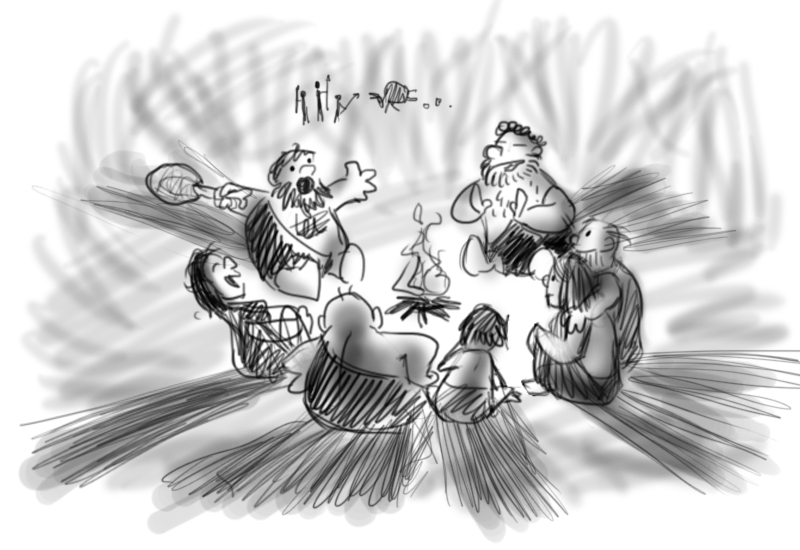
There is a story in there somewhere!

How compelling do you find the argument and analysis in The Sprit Level?  What are the methodological strengths and limitations?

First off, I want to explain that I am truly enjoying The Spirt Level and it's message.  I support the message and think that educators (at all levels) can glean much from reading this piece.  I think that the hard data is convincing.  Obviously, the strengths lie in the data, and the correlations of equity (or disparity) and reading rate, happiness, and even task completion rate all make sense to me.

...HOWEVER...

I honestly can't help but think that there is so much more that they are leaving out.  For every scenario that compares two variables, I have a list of questions that I would like to know.  For example, what about relativity and cultural differences?  Behind each chart lies a question and a story that explains that question.  

Data is limited by the human condition.  Behaviors can be counted, and beliefs and values can be communicated, but can readers really assume that income inequality causes all of the issues outlined in the book?  Here the process of induction, moving from the specific to the general, is fallible, for I suspect that the assumption of causation is simply too extreme.  I would like to view the data in its "raw" stage and make that determination on my own rather than make assumptions or generalizations based on the text. 

Is the correlation less compelling?  No, not really.....I simply believe that the data can take us only so far and that we need to share more of the human story in order to create new generalizations.  (Induction is a complex, beautiful thing!)


Saturday, September 6, 2014

I don't do numbers.

You've asked the question, "What's my paradigm?"

So...My life revolves around words. In fact, I had to warn my stats professor during our first encounter of our doctoral term that I haven't taken a math class since I was eighteen, and I really DON'T DO NUMBERS. I don't know exactly how this happened, for I was a very strong math student in secondary school. I guess something happened during my first go round with college: Math simply was not fun, and everything that incorporated the use of rich words was fun. I enjoyed learning new languages and cultures, how art is connected to time and place, and of course that literature is a reflection of the human condition. 

At first, I knew that I wanted to teach, but I didn't know what to teach. Surprisingly, my advisor in college said that I should be a math teacher, because my standardized math scores were very strong--he said that I'd be good at it. However, the thought of spending every day teaching kids to do something that was not fun sounded miserable to me. (The data, or the math, lied.) Don't get me wrong, I'm not dissing the importance of math--I get it. I know that we need it and that it's central to everything from science to archetypes. I simply do not see the joy in it.

Therefore, my lens at this point is definitely not positivist. I will not, however, completely disregard post positivism, for I am willing to admit that empiricism is important in research. My problem (or my strength, depending on how you look it it) is that I believe that everything tells a story--even data. In fact, I believe that data sometimes creates more questions than it answers. I understand that humans are unique in that they can think one thing and respond accordingly on one day and then completely change their minds on the following day.

I guess that I haven't really answered the question yet, but I always tell my students that knowing what you don't want to do is just as important as knowing what you DO want to do.

 I’m excited about the direction that I’m moving, and we'll see where I land.